AI Training Data Breach Exposes 7.7TB — Why Your Model's Supply Chain Is Its Weakest Link
April 17, 2026 · 5 min read
A major AI training data startup was breached, exposing 337,000 files totaling 7.7TB. Here's why data supply chain security is the next frontier in AI privacy.
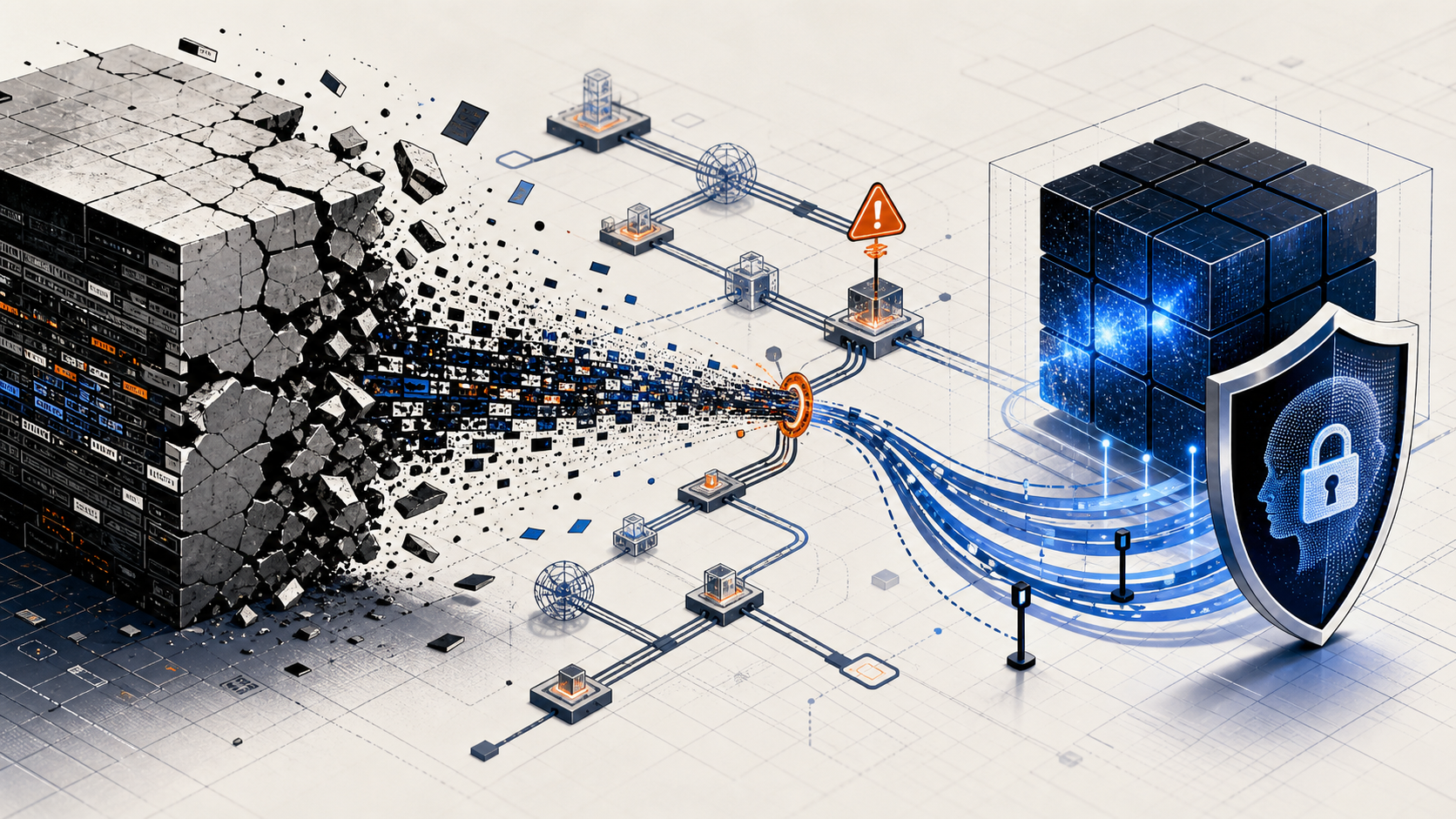
When we talk about AI security, the conversation usually centers on model outputs — jailbreaks, hallucinations, prompt injection. But this week, the real vulnerability showed its face upstream: a training data startup that services some of the biggest names in AI — including OpenAI, Anthropic, and Meta — was hit by a supply-chain attack that exposed 337,000 files and 7.7 terabytes of data.
This isn't a hypothetical. This is the breach that privacy advocates have been warning about for years. And it changes the calculus for everyone building, deploying, or using AI systems.
What Happened
The breach targeted a company in the data labeling and curation pipeline — the layer between raw internet data and the refined datasets that train foundation models. Attackers exploited a vulnerability in the company's supply chain, gaining access to an enormous trove of files that likely includes labeled datasets, annotation metadata, and potentially sensitive source material.
The scope is staggering. At 7.7 terabytes, this is one of the largest AI-related data breaches on record. The 337,000 files could contain anything from scraped web content to curated training examples — data that, once compromised, could be manipulated, poisoned, or weaponized.
Why This Matters More Than a Typical Data Breach
Traditional data breaches expose personal information — names, emails, credit cards. This breach is different because it targets the inputs to artificial intelligence systems. The implications cascade in ways that are harder to detect and far more persistent.
Data poisoning becomes trivial. If an attacker can insert or modify training data, they can subtly influence model behavior at scale. Imagine a foundation model that has been trained on subtly corrupted data — biased outputs, manipulated factual associations, or hidden backdoors that activate on specific prompts. The models trained on compromised data may already be deployed.
Attribution becomes nearly impossible. Unlike a leaked database where you can notify affected users, there's no straightforward way to trace which models consumed which portions of a breached training dataset. The contamination spreads silently through fine-tuning, distillation, and downstream applications.
Trust in the entire pipeline erodes. Foundation model companies have spent years building trust around their safety practices. But safety evaluations focus on model behavior, not data integrity. This breach reveals that the supply chain feeding these models has been operating without the scrutiny it demands.
The Privacy Dimension
Buried in those 7.7 terabytes is a privacy story that deserves its own spotlight. Training data pipelines routinely process text scraped from the open web — forum posts, social media content, personal blogs — often without the knowledge or consent of the people who created it.
When that pipeline is breached, the privacy violation is compounded. Data that was collected without consent is now exposed to unknown threat actors. People whose words were scraped to train AI now face the additional indignity of having that data leaked in a security breach.
This creates a new category of harm: derivative privacy violations, where the initial collection was already ethically questionable, and the breach amplifies the damage exponentially.
The Regulatory Landscape Is Catching Up — Slowly
This breach arrives at a moment when regulators are finally paying attention to AI data practices. The RAISE Act, which took effect in March 2026, imposes transparency and reporting requirements on frontier AI developers. California's new executive order on AI procurement adds another layer of accountability.
But none of these frameworks directly address training data supply chain security. They focus on model behavior, not the integrity of inputs. This is the gap, and this week's breach drove a truck through it.
What we need is an auditable provenance standard for AI training data — something analogous to a software bill of materials (SBOM) but for datasets. Every training example should be traceable to its source, its processing history, and its chain of custody. Without this, we're building billion-dollar AI systems on foundations we cannot verify.
What This Means for You
If you use AI tools — and in 2026, you almost certainly do — this breach affects you indirectly. The models you interact with daily may have been trained on data from this compromised pipeline. You won't see a notification. You won't get a breach letter. The impact is invisible but real.
For organizations deploying AI, the lesson is clear: vendor due diligence must extend to data suppliers. Ask your AI providers where their training data comes from. Ask about their supply chain security practices. If they can't answer, that's your answer.
For the rest of us, this breach is a reminder that AI privacy isn't just about what a model does with your prompt — it's about what went into the model in the first place. The supply chain is the attack surface. And right now, it's wide open.
---
GPTAnon covers the intersection of AI, privacy, and digital rights. Subscribe for daily intelligence on the stories that matter.